01
The old drywall comes off
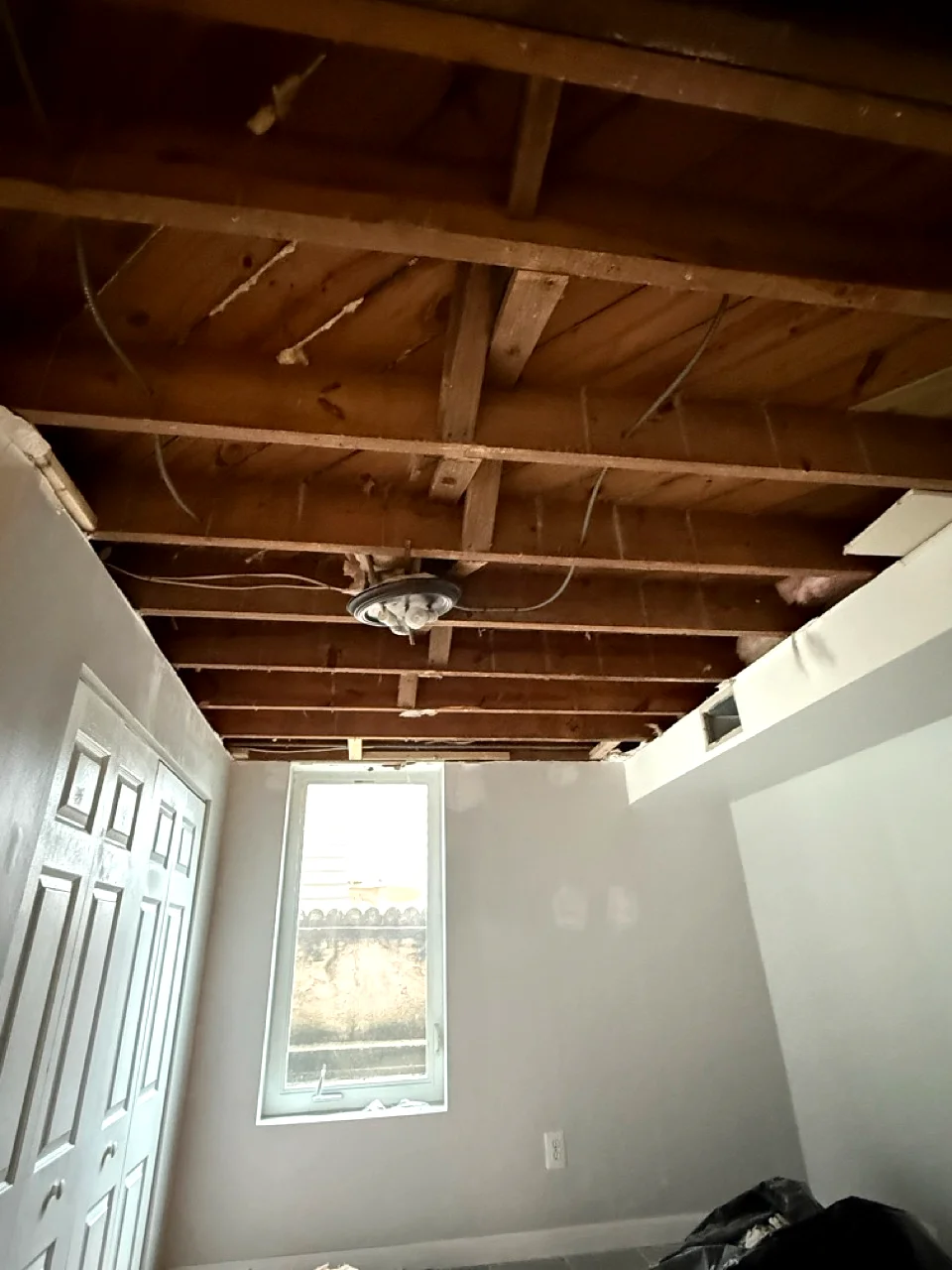
The drywall comes down first, and the old insulation comes out with it. The joists and the wiring are in the open before anything new goes up.
Soundproofing
Footsteps, a television, or voices pass straight through drywall that is screwed to the joists. We take that board down and build the ceiling back in layers. The new drywall hangs from hat channel, not from the wood.
When it helps
People call because a neighbor is loud, the walls between bedrooms are thin, a studio or office sits in the house, or footsteps come through the floor above. The noise gets into the room and starts to run the day. Sleep gets lighter. Work gets harder. That is when this work helps.
A television, music, or voices come through a shared wall or the ceiling under the floor above. We take that surface apart and build it back so less sound gets through.
You can follow a conversation or a movie from the next room. Rockwool and new drywall close a lot of that. Hat channel goes on when the wall still needs more separation.
Practice, calls, or recording need their own room. The same layers keep that room quieter, and keep the rest of the house from coming through.
A neighbor is moving into the basement, and you still live upstairs. We soundproof the ceiling between you so their day-to-day noise does not come straight through.
How the ceiling is built
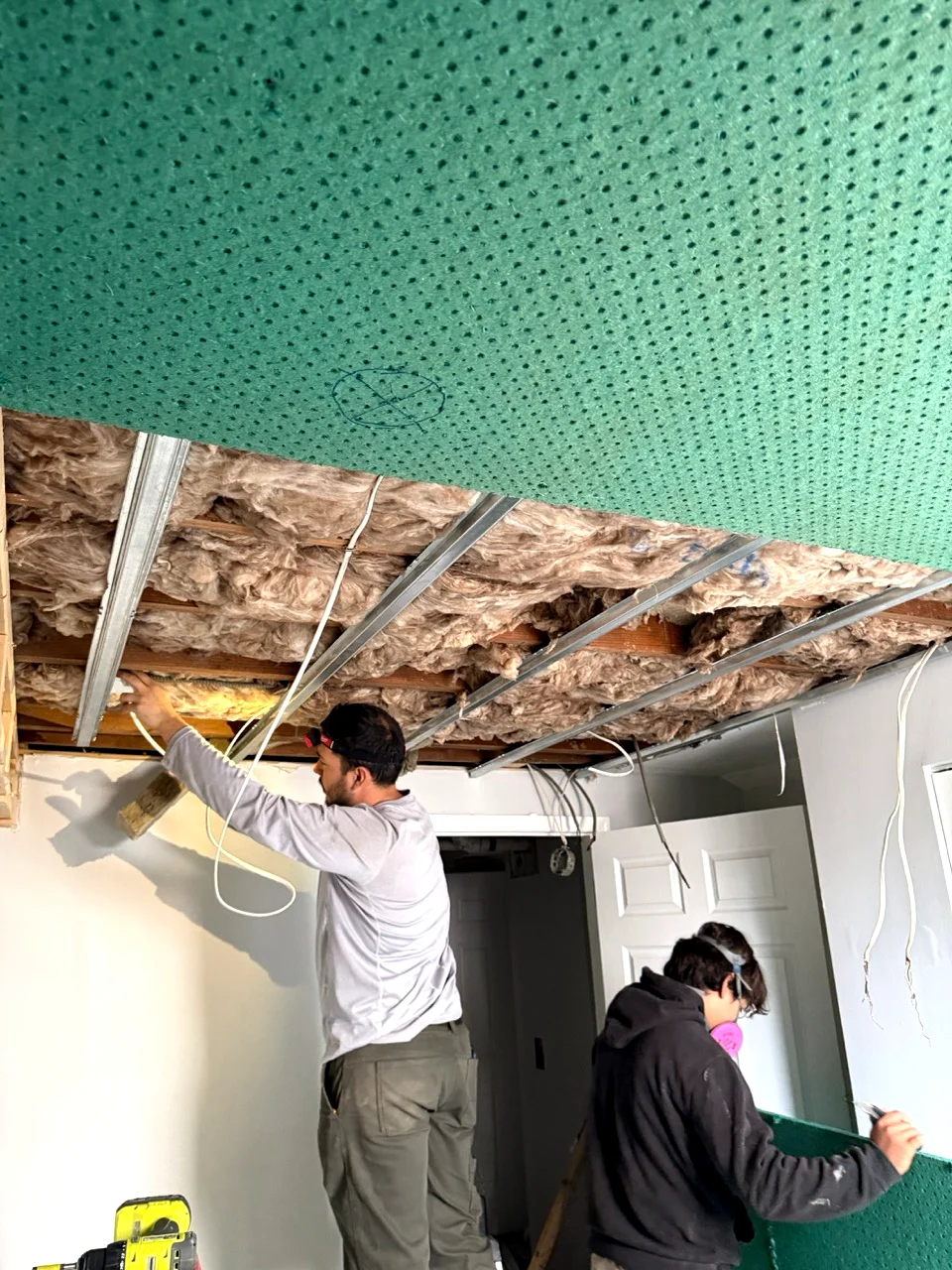
These photos are from a ceiling we rebuilt with this system. Knauf Performance+ is optional. Sonopan is an optional add-on. The same layers go on a wall when the noise is coming from the next room. If you only need a patch or a new wall, that work is on our drywall page.
The drywall comes down first, and the old insulation comes out with it. The joists and the wiring are in the open before anything new goes up.
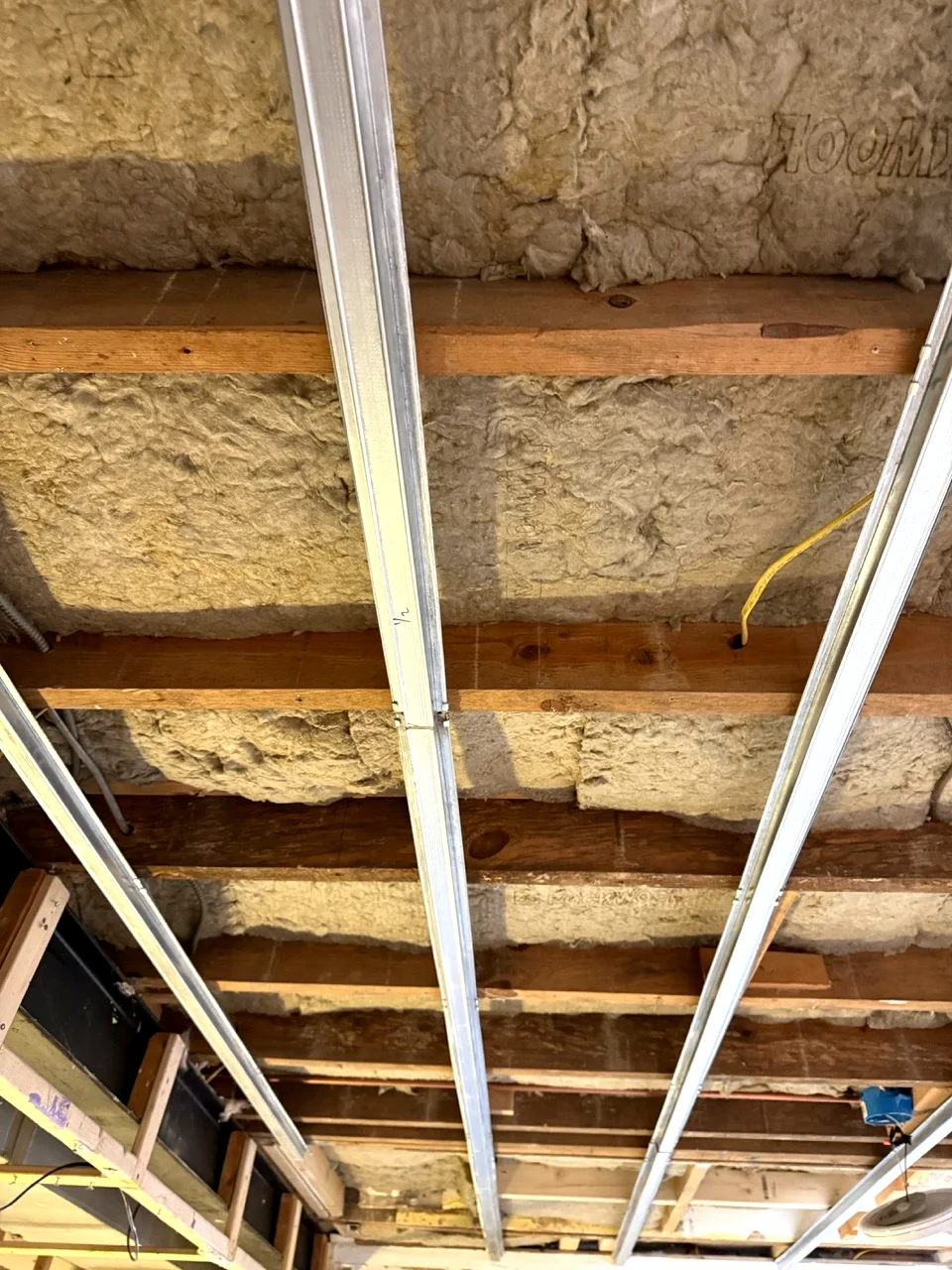
New Rockwool fills the space between the joists. Insulation clips fasten to the wood. The hat channel attaches to the clips.
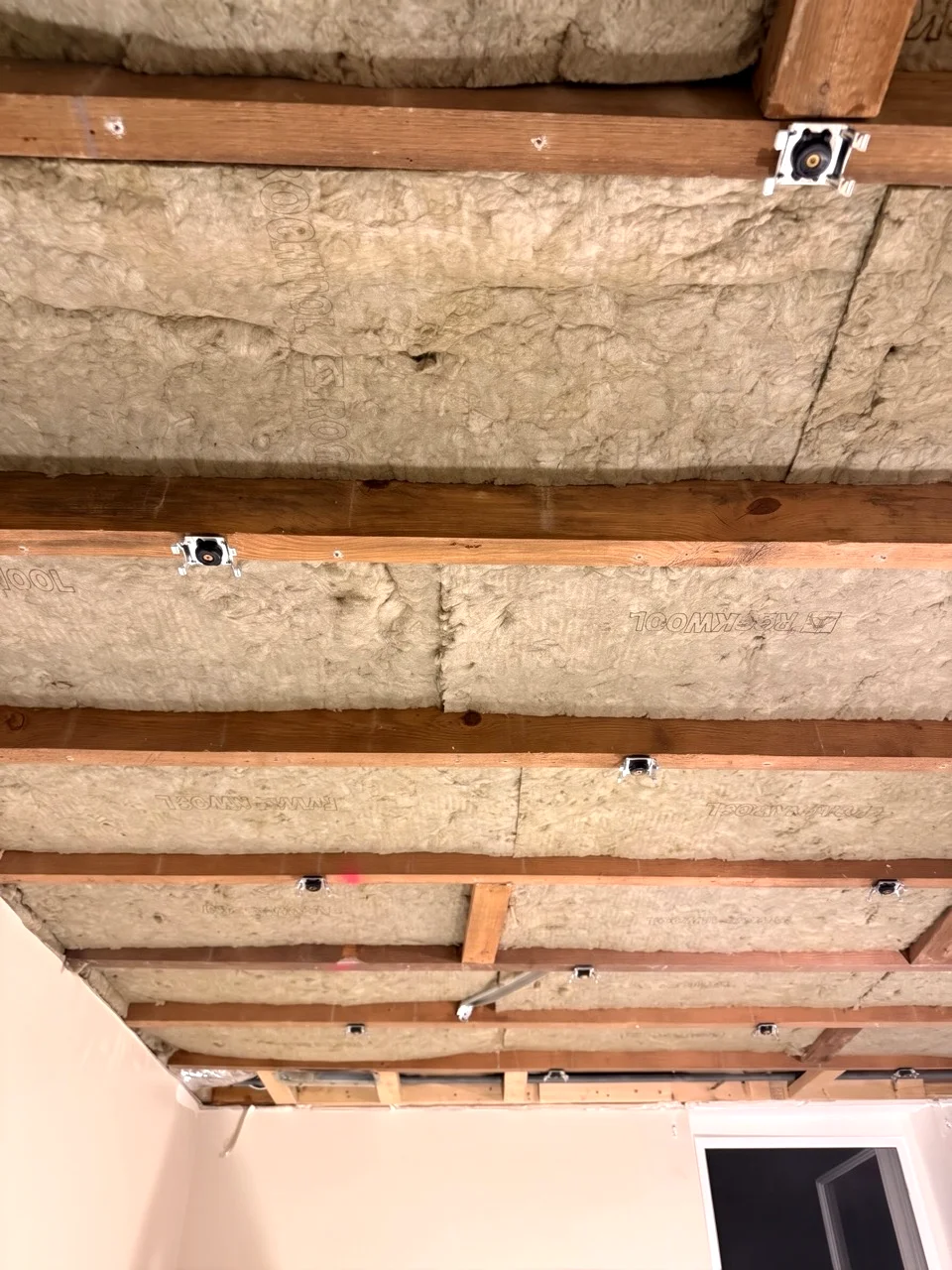
Knauf Performance+ is optional. We add that fiberglass layer when you want a second insulation with the Rockwool. Hat channel then locks to the clips and runs across the ceiling. The new drywall will be screwed into the channel, creating a barrier between the wood and the room below.
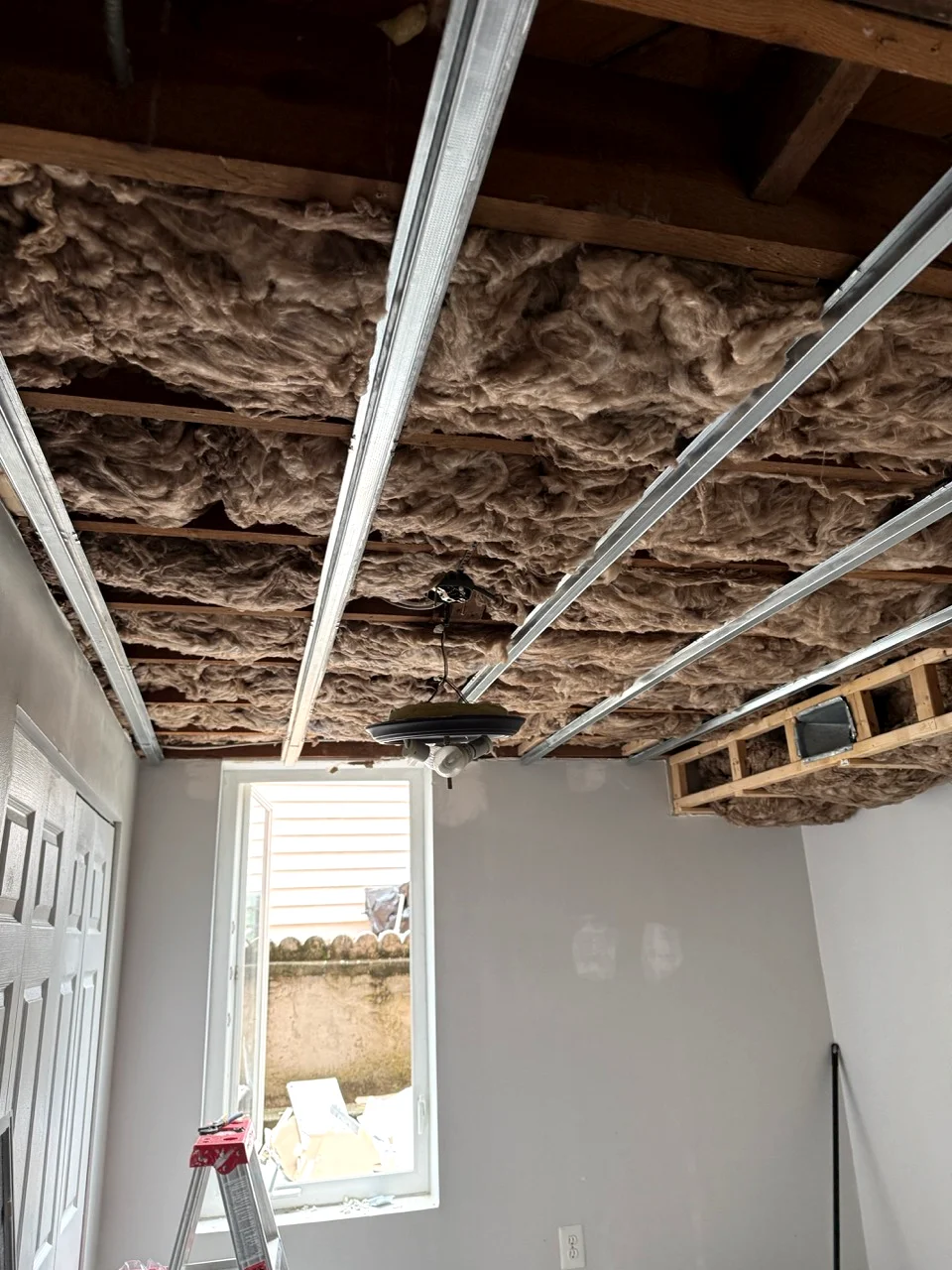
Sonopan is a dense soundboard. It is an optional layer when you want the room quieter. It goes on the hat channel, under the drywall. You can skip it. We can talk it through after we see the room.
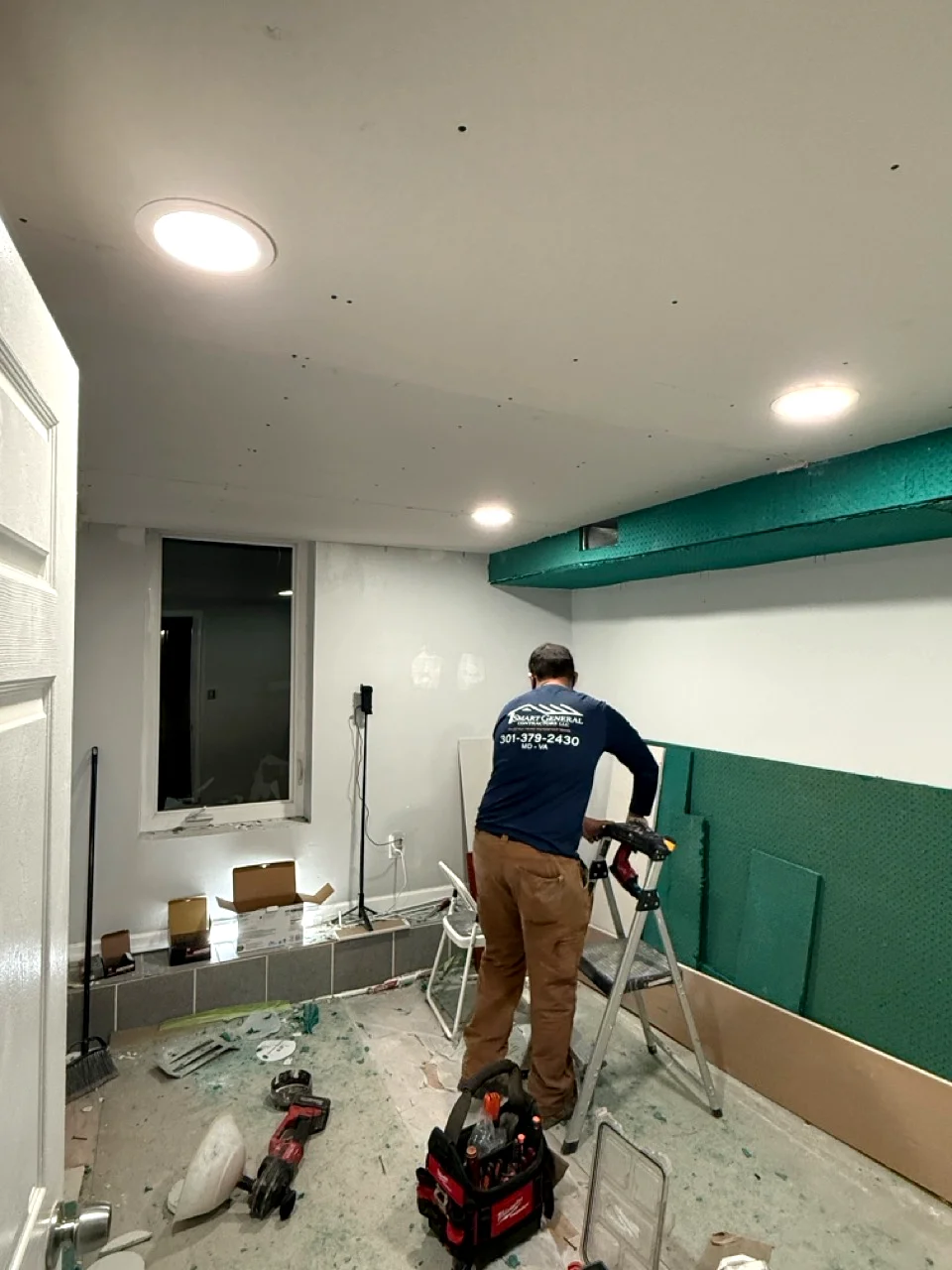
We hang the drywall, tape the joints, and install the lights. A new ceiling is a good time to move the lights or change the layout. We can also put your old lights back. The ceiling is sanded smooth and ready for paint. We can paint it on the same job if you want that done too.
What to expect
Talking drops into the background of the room. Footsteps turn into a distant thud but do not vanish. Hard wood flooring upstairs carries more than carpet. Once we look at your ceiling, we can talk about what we expect to hear.
| Noise | At the source | Heard before | Heard after | What you hear |
|---|---|---|---|---|
| Talking | About 65 dB | 35-40 dB | 10-15 dB | Quiet enough to disappear into the normal sound of the room. |
| Walking | About 60 dB | 50-60 dB | 25-30 dB | A dull, distant thud. Most of the vibration was gone. |
Before we start
We look at the ceiling or the wall, measure it, and tell you what we found. The estimate is free.
You get a written price for the agreed scope before we open anything up. That price stays locked.
The room is open while the layers go in. We cover the floors, and we clean up before we are done for the day. We are licensed and insured.
We do this work from Silver Spring, across Montgomery County, Prince George's County, and Northern Virginia. That includes Bethesda, Rockville, Potomac, Hyattsville, Bowie, and College Park.
Tell us which room it is. We will come look at it and give you a written price before we start.


